
“A lot of what I do isn’t for everyone, but I’ve found that the people who like it really like it” — welcome to Joey Batey’s underworld.

Out of the Dark
LONDON, September 30, 2025

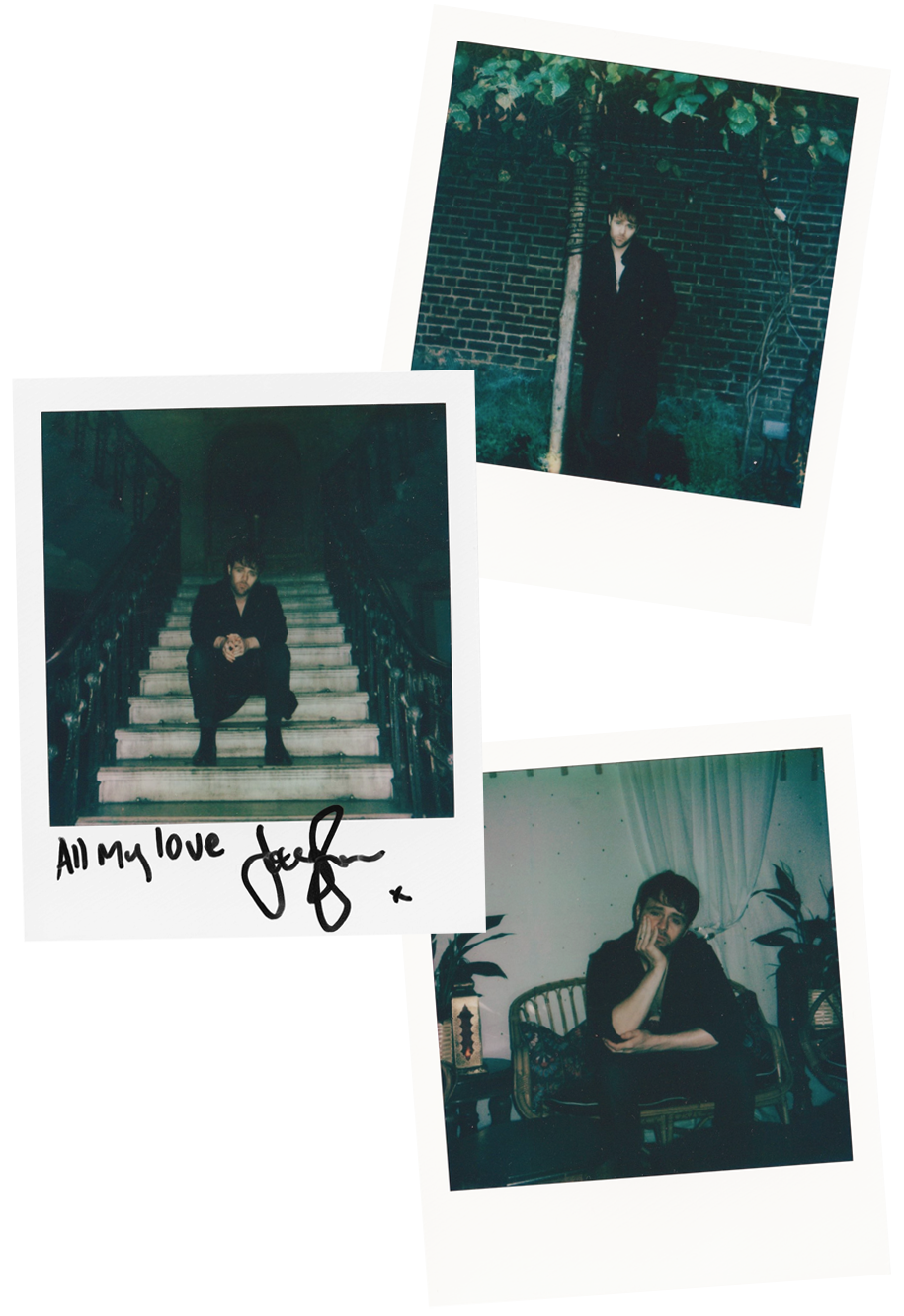
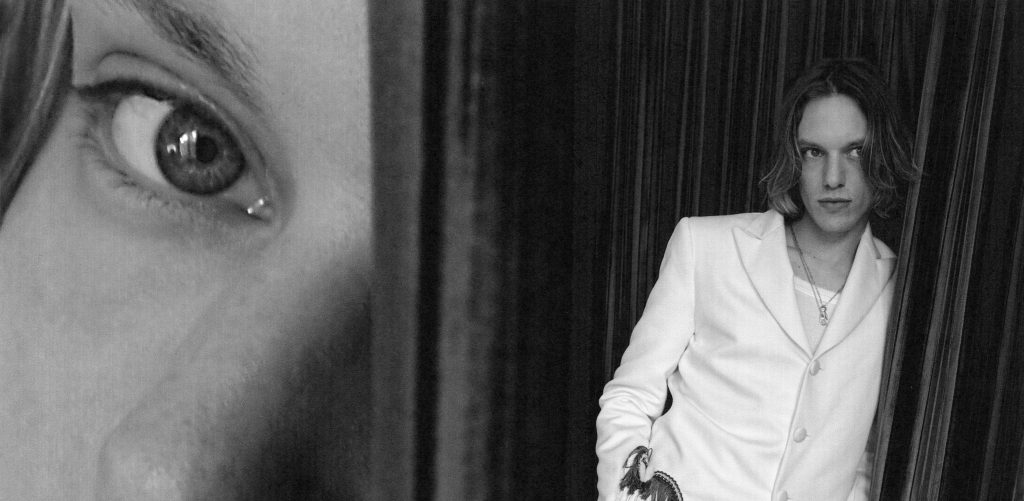
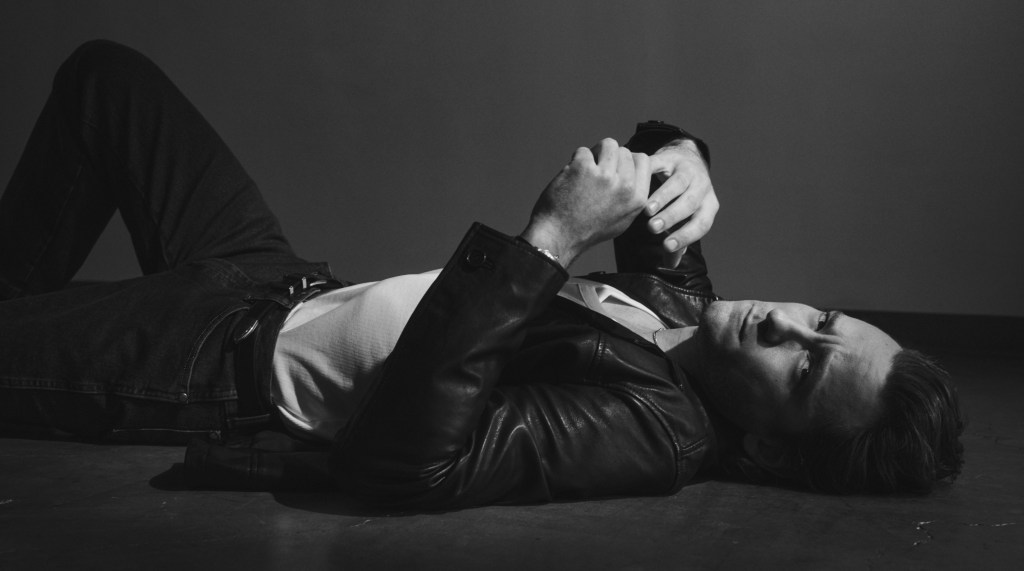
When I sit down with Batey, it’s the calm before the storm — because behind the curtain, the multifaceted artist certainly hasn’t been quiet. He launched his debut novel, It’s Not a Cult, a few days before returning as fan-favorite Jaskier in the penultimate season of The Witcher. “I think the show was originally going to come out at Christmas, so that was completely by chance,” he says. Batey may have gained global recognition for his performance — both as an actor and a singer — in the Netflix fantasy series, but for the “introvert that’s trapped in a number of extroverted jobs,” music and writing have been his faithful companions since childhood. “Weirdly, acting was my side hustle. However, I’ve learned that I need a bit of everything in order to function. As soon as I finish a book, then I will perhaps make a TV show, or I will create some more music.”
At 16, because he “wasn’t very happy at home in the North [East of England],” Batey went off to France on his own, lived with a host family, and did the French Baccalaureate (the high school diploma). “It was scary at times, and it wasn’t always the happiest time. But I think a whole year in France at such a young age taught me courage, and I started to realize that I was a bit more formidable than I thought I was.” Thereafter, he got an agent while studying modern and medieval languages at Cambridge. “I loved doing amateur dramatics, mainly because I found it quite hard to make friends. So, theater and doing terrible plays at university seemed like a nice way of meeting people with like-minded interests, and people who were friendly and did most of the talking for me. And during that time, I also spent some time in Paris.” Even though he believes his language skills have gotten rusty, he quips — in flawless French — that his accent is a mix of Ch’ti (a northern French dialect) and Belgian. “I found that I was a very different person in French. I found myself a little bit more blunt, and I think there was a certain tendency to be a little bit gruffer,” he recalls.

Even though Batey has a public profile on Instagram, he is quick to confess that he gets “anxious about it,” hence why he is hardly online. “I’m sorry to disappoint [the fans],” he laughs when I point out that they are understandably desperate to see more of him. “If my publisher or whoever says, ‘Can you post about this?’ it takes a whole day for me to work up the courage to do it. I’m happy to do it, but I’m also a technophobe, so I have to ask them how to do it, and I’m terrified of pressing the wrong thing.” Regardless, he values the audience he connects with, sharing with a smile, “My little corner of the world is full of very lovely people. And I’ll happily sign something, but I very rarely do selfies because I find the selfie culture really difficult. Then, quite a lot of the fans of The Amazing Devil — Batey’s alt-folk group — know that, so they often don’t ask for one.”

As far back as he can remember, writing has been in his blood since he was a teenager. “It helped me get over some turbulent times in my life, particularly when I was at university, because I could use the act of storytelling and writing as a form of therapeutic escape,” he says. “So often, people will see me wandering around my local park, talking to myself while I’m writing a scene in my head. If you can’t get to a therapist or to friends and family to talk about your problems with them, then you should be your own best friend as best as you can, and talk your way through whatever is going through your head.”
It’s Not a Cult is Batey’s first novel published by Raven Books — but in fact his “eighth fully completed book,” as “countless others are sitting in drawers somewhere, half-finished.” In the darkly comic folk horror, he goes back to his Northumbrian roots and navigates the complex realms of fandom, myths, and beliefs. “I’ve been exposed to sides of humanity, fandom, and social media that have been very horrible,” he reveals. “A large part of the book is about how the modern, constant self-documentation has overruled civility in so many ways — and what can go wrong when that civility is broken.”

“I’m not in the business of creating something for the masses,” Batey says. “I think I want to create stuff that reaches the introverts and the people who need a little bit of representation, so that they might be able to see themselves in a happier way.” Reflecting on “the power that phones and constant communication have over the plasticity of the human mind,” he adds, “That, to me, is what’s scary, and why this book is closely related to the genre of horror. Half the battle is figuring out whether what you’re reading or who you’re interacting with is going to be dangerous to you, or dangerous to your mental health. That constant level of threat and constant level of influence over your own choices and your own identity can be, for me, the scariest thing.”
The book’s striking artwork was also provided by Madeleine Hyland — Batey’s collaborator, “dear friend,” and the second half of The Amazing Devil. However, “they are two distinct projects that haven’t influenced each other.” He clarifies with a laugh, “If anyone does read the book, they’ll quickly realize that the characters are a far cry from myself, Madeleine, and any other collaborator — at least I hope so, because the characters are not always the nicest people in the world.”

“People believe we’re something we’re not,” one of the characters voices at the beginning of the book, as we get introduced to a nameless music band that accidentally starts a death cult. That line naturally makes me wonder what Batey believes is the biggest misconception people have about him. “I have disappointed quite a few people [who] are expecting me to be Jaskier when they meet me, and I’m not as loud, or attempting to be funny, charming, or flirty,” he lets off with a chuckle. “It’s a character that requires so much energy to play, so I’m not going to turn him on. I often have to talk to no one after finishing a big job like [The Witcher], otherwise I don’t recharge.” He admits he would rather spend an evening playing Dungeons & Dragons with friends than in the spotlight, but he accepts this side of the job as “a necessary difficulty.” While he is grateful for the presence of his colleagues when he is on duty for a television show he is “a small part of,” it takes on a different tone when it comes to his other creative pursuits. “It’s a little bit more nerve-wracking because there aren’t as many places to hide. And if it’s bad, then you are bad,” he says with a laugh.
“I used to be quite obsessed with what would be remembered about me if I died, but it no longer feels like that at all. Now, I’m far more concerned with how the process makes me happy,” he says, echoing a sentiment he touches on in the first pages of It’s Not a Cult. There is a reason why Batey prefers hiding in the shadows to focus solely on his craft — he isn’t chasing the clamor of the crowds, and his inner circle is what matters most. “If I’m writing something and I can picture my two sisters laughing in my head, then it’s going in the book. That’s the closest I get to thinking about people’s perceptions of [my] work. Life is too short to get bogged down with every person’s opinion under the sun.” He simply appreciates that “every person can have their own personal relationship” with any story he shares with the world.


Despite not wanting It’s Not a Cult to be associated with The Amazing Devil, Batey confirms that new music is underway. “I know that it’s been a while for some of the fans of The Amazing Devil, but I’m thankful for that patience,” he says. “The fourth album is done, and it was a really long and slightly arduous journey to get to it. It was written in a fairly dark place [because] I was traveling a lot, and it was quite hard to get myself and Madeleine in the same room without life getting in the way. But thankfully, we’re about 85-90% done with the final edits of it, so we’re hoping to release it in December.”
For now, his attention is on his book — and inevitably, on The Witcher. “I think people are going to be really pleasantly surprised,” he says about the last two seasons that got filmed back-to-back. The Netflix adaptation of Andrzej Sapkowski’s books has sparked a lot of mixed reactions since Liam Hemsworth was announced to replace Henry Cavill in the titular role. Nevertheless, Batey manages to keep the noise at bay and stays anchored in his values. “My job isn’t to anticipate, nor is it to judge. My job is to turn up and try to do the best job that I can, whilst helping and welcoming people back to the show, or into the show, and facilitating a kind of environment in which they can do their best work as well.”

True to his outlook on life, Batey states, “I put my phone in a drawer every evening and say, ‘No one can contact me now.’” During our hour together, he only takes it out to track his driver, because straight after that, he is expected at the studio to bid one last farewell to the set of The Witcher. “I had my last day of shooting last week, but it’s Liam, Anya [Chalotra], and Freya [Allan]’s last shoot day — and the last shoot day of the whole show today.” He beams, “Crew and cast members have come and gone, but me and a handful of others have been doing this and grown together for so long. So, I’m going in to give them a hug, a bit of champagne, and then leave — it’s the very least I could do.” Talking about ambitions and what the future has in store, he begins with praise for his longtime co-stars. “[Freya] is going to go places, and so is Anya as well. Everyone, I wish nothing but the best for all the actors and crew on this show. And I’m dreading the wrap party tomorrow. It takes a village to make a TV show like this, so it will be like having a village fair, where everyone’s dancing, and it’s full of a lot of love.”
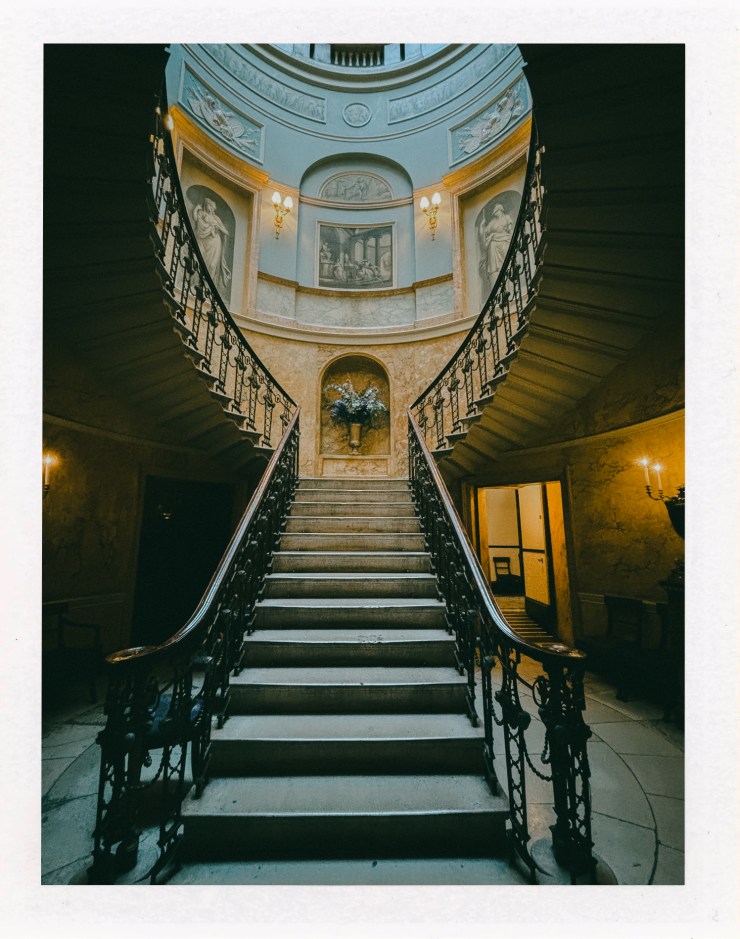
As for his own aspirations, he thinks it over, then answers, “It’s not that I don’t have ambition, but it certainly doesn’t control me.” This is the first time in seven years he doesn’t really have a plan, so he is “scared of it,” but also ready to embrace the beauty of the unknown. “It’s going to be a funny old couple of years coming up. This role [on The Witcher] was such a huge commitment, but I’m so glad I did it. You can be happy that you did it, as well as happy that it’s over.” As we talk about “the little things” that bring us joy, Batey gushes over pictures of my dogs and says, “I’m so desperate for a dog or two, but it’s so unfair to the animal when you’re in a job which requires so much travel.” He concludes with a gentle laugh, “I’ve resigned myself to the fact that I will have to wait for a dog until I’m in my 40s or 50s — when no one will hire me anymore.” With only five minutes left on the clock, he agrees to step in front of the camera. A black car is waiting for him while we take the final shots outside the Georgian townhouse. Yet Batey remains as calm, cool, and collected as you can imagine him to be.
It’s Not A Cult by Joey Batey, £16.99, Hardback, Raven Books, Bloomsbury, October 23, 2025
The Witcher season 4 premieres globally on October 30, 2025, only on netflix

 GRUMPY MAGAZINE
Leave a comment